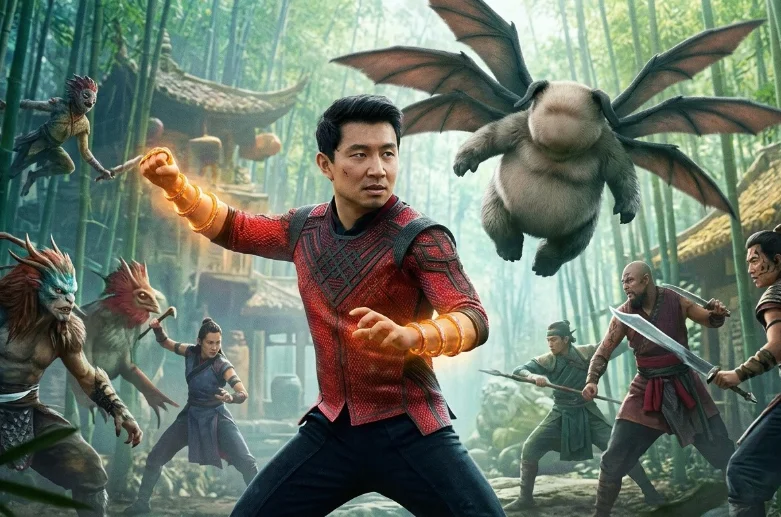
If you searched for Morris Shang Chi, you probably want an explanation for Marvel’s strange, faceless creature. He appears during the journey to Ta Lo and quickly becomes one of the film’s most memorable supporting characters. His unusual design also has roots in Chinese mythology rather than being a random Marvel invention.
Direct answer: The furry, winged creature in Shang-Chi and the Legend of the Ten Rings is a Hundun from Ta Lo. He has six legs, four wings, and no visible face. He befriends Trevor Slattery and later guides Shang-Chi’s group through the dangerous route leading to Ta Lo.
Morris at a Glance
| Quick fact | Details |
|---|---|
| Character | Morris |
| Movie | Shang-Chi and the Legend of the Ten Rings |
| Creature type | Hundun |
| Home | Ta Lo |
| Appearance | Six legs, four wings, fur, feathers, and no visible face |
| Companion | Trevor Slattery |
| Story role | Helps guide the group toward Ta Lo |
| Vocal effects | Dee Bradley Baker |
| Visual effects studio | Trixter |
| Mythological inspiration | Chinese Hundun traditions |
Key Takeaways
- The creature is a Hundun associated with Chinese mythology.
- His missing face is intentional and comes from the mythological inspiration.
- He becomes Trevor Slattery’s companion while both are inside the Ten Rings compound.
- His knowledge of the route makes him essential to reaching Ta Lo.
- Trixter created the final digital character for the movie.
- The production used animal references to make his movements feel friendly and believable.
- Dee Bradley Baker provided his vocal performance.
Who Is Morris in Shang-Chi?
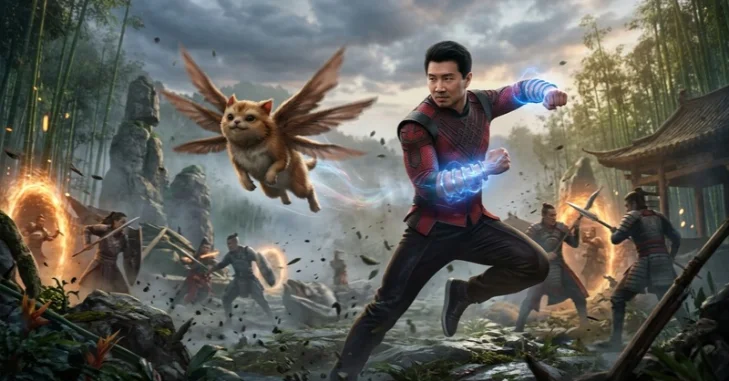
The character first becomes important after Shang-Chi, Katy, and Xialing encounter Trevor Slattery. Morris Shang Chi Trevor can understand the strange creature despite everyone else hearing only noises. That relationship turns what could have been a visual joke into an important story connection.
The creature comes from Ta Lo, the hidden world connected with Shang-Chi’s mother and her family. He therefore knows something the human characters desperately need: how to reach that mysterious place. His guidance allows the group to continue before Wenwu reaches the village.
He also gives Trevor a companion after the former actor’s imprisonment by the Ten Rings. Their interactions add humor without removing the creature’s importance to the plot. By the time they enter Ta Lo, he functions as both a friend and a navigator.
Morris Shang Chi Origins: What Is the Creature Based On?
Marvel based the creature on the Hundun, a being associated with ancient Chinese traditions. The concept is often connected with chaos and an undifferentiated state before cosmic order. Several traditional depictions also emphasize an unusual body without ordinary facial features.
That mythological connection explains why the movie does not give the creature eyes, a nose, or a visible mouth. His appearance is strange by normal animal standards but fits the concept Marvel adapted. The film then makes the design softer through feathers, fur, small wings, and animal-like behavior.
Some discussions call the creature a Dijiang, while production sources frequently use Hundun. Those descriptions are related through Chinese mythological traditions but are not always treated identically by every modern source. For movie viewers, Hundun is the clearest term used by Marvel-related production material.
Why Does the Creature Have No Face?
The missing face comes directly from the concept behind the design. Marvel’s creative team therefore faced an unusual problem because faces normally communicate emotion instantly. Eyes, eyebrows, and mouths give animators obvious ways to show fear, excitement, or affection.
The artists had to communicate personality through body movement instead. Wing motion, posture, weight shifts, fur, feathers, and sounds became especially important. Trixter also studied familiar animals so audiences could recognize emotional behavior without facial expressions.
Visual-effects supervisor Christopher Townsend described the creature as headless and faceless when discussing its creation. The team still wanted viewers to find it appealing rather than disturbing. That challenge became one of the most distinctive parts of the character’s production.
How Marvel Made a Faceless Creature Feel Cute
Trixter handled the digital character work and faced several technical challenges. Six legs meant animators could not rely on ordinary four-legged animal movement. Four wings, thick fur, and a compact body added more complexity.
The studio studied animals including wombats, dogs, bears, and birds while developing believable movement. These references helped the character feel recognizable despite its impossible anatomy. The result combines puppy-like behavior with a body unlike any real animal.
That approach explains why viewers can read his emotions without seeing a face. He leans, hops, flutters, and shifts his body in ways audiences understand instinctively. The visual effects make those movements feel like personality rather than mechanical animation.
Marvel’s approach resembles the way other fantasy films build emotional connections through creature behavior. LifeFie’s Kakamora explainer examines another example involving unusual fantasy characters inspired by older cultural traditions. Both cases show how filmmakers can transform folklore influences into recognizable screen personalities.
What Does He Do in the Story?
His most important contribution is guiding the heroes toward Ta Lo. Wenwu believes his deceased wife is calling from behind a sealed gateway there. Shang-Chi’s group needs another route if they hope to arrive in time.
The Ta Lo creature understands the shifting forest path that protects the village. Trevor interprets his communication and helps the group follow those directions. Without that knowledge, reaching the hidden settlement would be much harder.
Once inside Ta Lo, the heroes discover many other mythological creatures living throughout the area. The guide therefore stops looking like an isolated oddity and becomes part of a much larger ecosystem. That reveal also makes his earlier connection with the hidden world clearer.
What Is His Relationship With Trevor Slattery?
Trevor Slattery knows the creature before Shang-Chi’s group meets either of them. The two have developed a close relationship during Trevor’s time inside the Ten Rings compound. Trevor even claims he understands what his companion communicates.
Their bond works as comedy, but it also solves an important storytelling problem. A creature without normal speech needs someone who can explain its intentions. Trevor becomes the bridge between the animal and the rest of the group.
Ben Kingsley also interacted with a physical stand-in during filming rather than staring at empty space. Production footage shows the filmmakers using a green proxy that represented the creature’s size and weight. The digital character could then replace that object during visual-effects work.
Who Provides the Creature’s Voice?
Veteran voice actor Dee Bradley Baker provides the vocal performance. His credit appears with the character in the movie’s cast information. Baker is particularly known for creating distinctive voices and sounds for animated creatures.
The performance matters because normal dialogue would change the character completely. Instead, chirps and other sounds support Trevor’s claim that he can understand his companion. Those noises work with physical animation to communicate reactions.
Removing ordinary speech also keeps the creature mysterious. Viewers understand his mood without receiving direct explanations from him. Trevor’s translations become funnier because the audience must decide how accurately he understands the sounds.
Was a Real Creature Used During Filming?
The finished character is digital, but performers had physical objects on set. The crew used green stand-ins so actors could judge position, size, contact, and weight. One version reportedly included extra weight to make carrying the creature appear convincing.
This method gave Ben Kingsley and other performers something tangible during scenes. They could hold, touch, or react to an object rather than imagining every movement. Trixter later replaced those proxies with the completed digital model.
The technique was especially useful because the character spends significant time close to human performers. Small errors in eye lines or physical contact would have made the effect less convincing. The practical reference helped the visual-effects team preserve believable interaction.
Why the Ta Lo Creatures Matter
The Hundun is only one example of the creatures used to establish Ta Lo’s identity. The movie also includes beings inspired by qilin, nine-tailed fox traditions, guardian lions, and dragons. These creatures signal that the heroes have crossed into a place with different rules.
Their presence also connects the fantasy setting with cultural references beyond standard Western fantasy designs. The filmmakers did not simply populate the area with familiar elves or generic monsters. Instead, Chinese-inspired mythological imagery shapes much of the environment.
Readers interested in another film’s treatment of folklore can see LifeFie’s Kakamora and Moana mythology breakdown. For more entertainment character explainers, LifeFie also covers Alysanne Blackwood from House of the Dragon and Lake Bell’s film and television career.
Why the Character Became So Memorable
His design creates an immediate contradiction that makes him hard to forget. A faceless creature could easily look frightening, yet the movie presents him as gentle and expressive. That contrast gives viewers something unexpected.
He also contributes directly to the plot instead of existing only as merchandise-friendly comic relief. His knowledge provides the heroes with access to Ta Lo. His relationship with Trevor gives both characters an emotional and comedic purpose.
The filmmakers also avoided explaining every detail about his biology. Viewers never receive a scientific lecture about how he sees, eats, or navigates. Keeping those questions unanswered preserves some of the strange charm surrounding him.
The Bottom Line
The creature works because Shang-Chi gives an unusual mythological idea a clear purpose in the story. His lack of a face makes his design distinctive, while his movements make him approachable. His ability to guide the heroes also makes him more than a background animal.
For U.S. viewers discovering the character after watching the movie, the mythology adds another layer to the joke. What looks like a strange furry sidekick has older cultural inspiration behind its design. Understanding that connection makes Ta Lo’s broader collection of creatures more interesting as well.
LifeFie readers who enjoy character and mythology explainers can continue with the site’s coverage of the Kakamora, Black Aly, and other entertainment subjects. Those guides separate source inspiration from the versions created for movies and television. That distinction helps fans enjoy fictional adaptations without confusing them with their cultural or literary origins.
Frequently Asked Questions
What is Morris Shang Chi?
He is a six-legged, four-winged Hundun from the mystical world of Ta Lo. He becomes Trevor Slattery’s companion and helps Shang-Chi’s group find the hidden village. Marvel based his unusual appearance on Chinese mythological inspiration.
Why does he have no face?
His faceless body reflects the Hundun concept that inspired the film’s designers. The animators therefore communicate his emotions through movement, feathers, fur, wings, and sound. His missing face is intentional rather than an unfinished visual effect.
Is he a real animal?
No known animal matches his appearance. He is a fantasy creature created for the Marvel Cinematic Universe using mythological inspiration. His movement was informed by real animals to make the final animation believable.
Is he from the Marvel comics?
The movie version is closely associated with the MCU’s interpretation of Ta Lo. His role in Shang-Chi and the Legend of the Ten Rings is built around the film’s fantasy setting. The character should not be confused with a conventional human Marvel superhero.
Who voices the creature?
Dee Bradley Baker provides the vocal performance. His sounds work alongside the visual animation to communicate the creature’s emotions. Trevor Slattery then interprets those noises for the other characters.
What kind of creature is he?
He is identified as a Hundun in material discussing the movie and its production. The design draws from Chinese mythological traditions associated with chaos. Marvel then adapts that inspiration into a friendly inhabitant of Ta Lo.